
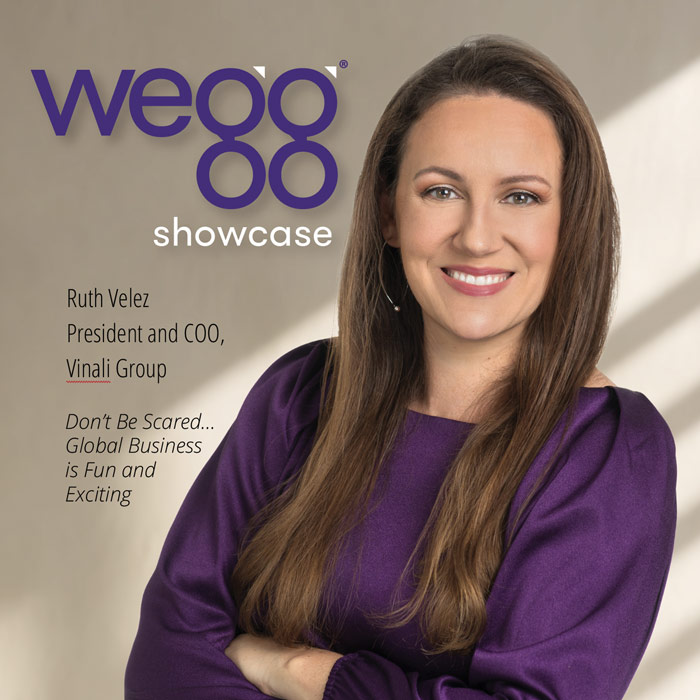
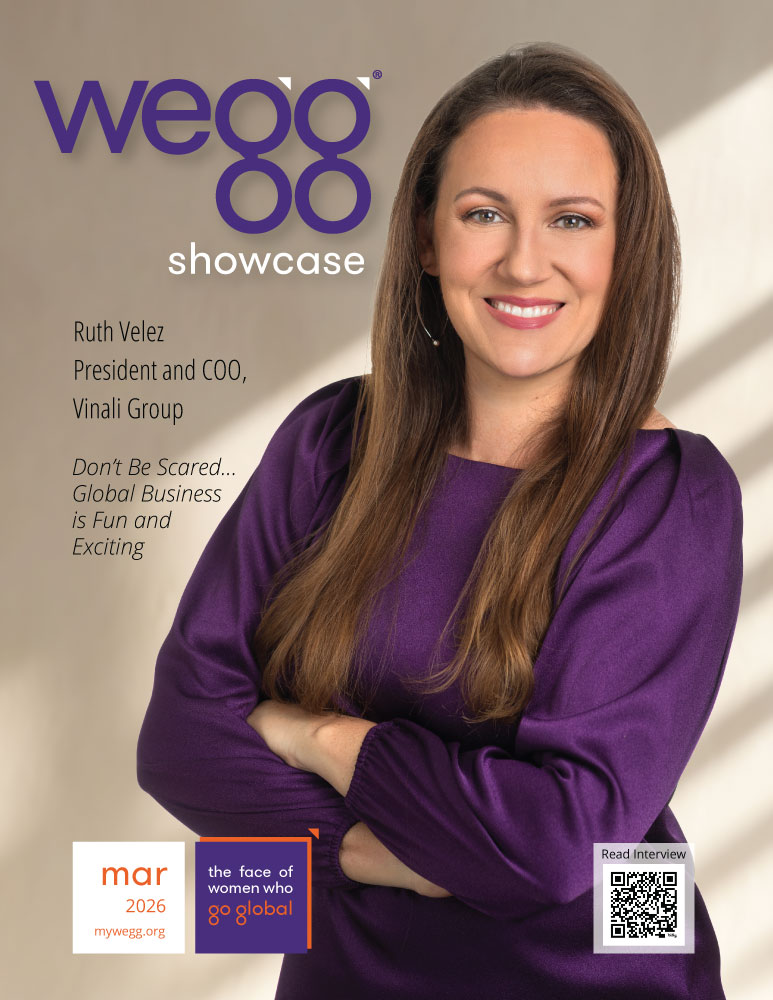
wegg® showcase: Ruth Velez, President and COO of Vinali Group
- Posted by Asra Khan
- Categories Featured, Scale, wegg® showcase, weggs
- Date March 2, 2026
Issue 22: March 2026
Sponsored by: 
Tell us a little bit about your business and what inspired you to start it.
Vinali Group is a nearshore outsourcing firm. Our specialty is finding the right talent, employing them well, and making them feel like they’re just another remote professional employee for you.
We started out as a temp staffing firm for a variety of industries, from blue collar to high–level IT roles and executive positions. Any firm that needed temps, we found them. At one time, we even found hard-to-find school bus drivers; we worked on some crazy projects.
We were U.S.-exclusive for the first nearly four years, but we almost lost it all when COVID hit. Once things started opening up again, there was an avalanche of work from our clients. At that point, we had run through all of our savings, so we needed to find a more cost-effective labor force. My husband is half-Colombian, so through some family connections we started hiring recruiters out of Colombia. We hired eight recruiters at first. That went well, so two months later we hired another ten, then another ten. Once we got to fifty recruiters, we thought we should ‘put a ring on this,’ take good care of these people and give them benefits. So we incorporated in Colombia.
Just after offering formal employment and opening our office in Bogota, we realized we should open up this talent pool opportunity to our clients. They, too, can find fantastic English–speaking talent in Latin America, from executive assistants all the way to highly–specialized IT, even medical professionals doing telehealth, legal services, medical billing. If it’s a job that can be done on a laptop, and you’re open to them working remotely, we will look until we find that needle in a haystack. We will pay them well and it will still be a savings for our US clients. We eventually pivoted completely to offering this form of staffing and it has gone very well for us.
When you made the pivot to international talent, what challenges did you face and how did you overcome them?
There were a lot of challenges. The language, first of all. I’m fluent in Spanish, but I had to become accustomed to Business Spanish. The biggest challenge at the time, however, was finding an attorney that could communicate and translate the different laws so I could grasp the concepts and make the best decisions. I needed hand holding, and that’s why it took me a year to find a good attorney to help us set up the business and fully understand how things work in another country. And then, of course, trust was a huge component. Who do you trust and how do you trust? Because that was our money. That was our business. For my husband and me, this is our lifeline. We put everything into this, so selecting a trusted Authorized Representative was a key decision to making things run smoothly.
Also, labor laws are completely different. Colombia is very employee-centric, as in most of LATAM. Employees don’t have the independent mindset that an American employee has. They’re expected to be taken care of, but they’re going to take care of you, and that’s why we get some great talent. On the flip side, the laws favor the employee, so there’s enormous risk and enormous cost for a business, but we made it our business to do this well while still making it taste-and-feel American to our clients.
What advice would you give women entrepreneurs who are looking to expand their business internationally?
Navigate through the seasons and be brave. Enjoy the journey; enjoy the ups and downs and never stop learning. That’s what entrepreneurship is about. And don’t be scared. Just get in there, talk to people. Business professionals are everywhere in the world. Business always has to be a win-win.
Learn the cultural nuances as soon as you can. Some cultures in Latin America are more passive. They say ‘yes’ to everything and then they don’t show up. Others are much more aggressive, and they’re all in to the point of being overbearing. Figure out the nuances and celebrate them, because they’re not going away. I’ve had to train my team in Colombia that they don’t need the formal greetings every day of “Good morning, how are you? How is life? Did you sleep well?” Just say, “Good morning, Ruth,” and ask me the question. Vice versa, I’ve had to learn to be a bit more cordial and formal. All my emails cannot be so direct. They should have a formal greeting and whatnot. Those are just some of the cross-cultural differences we’ve learned to embrace and really appreciate.
Being a woman entrepreneur has many risks and many rewards, so I admire any woman entrepreneur who can juggle life and business. It’s hard to have it all at the same time. I tell people, “I do have it all, it’s just not where I want it to be all at the same time!”
Global business is fun, challenging and exciting! It’s awesome to do well where you live, but it’s also great to realize that because you came up with this concept of a business, you’re an enormous blessing to both your clients and people in other countries, too.
Tag:wegg showcase

Asra Khan is wegg's Newsletter and Special Projects Manager. As a creative force, her focus has been dedicated to amplifying the voices of women and Asians within the realms of art, entertainment and education.
Previous post